
Ditto AI_$9.2M
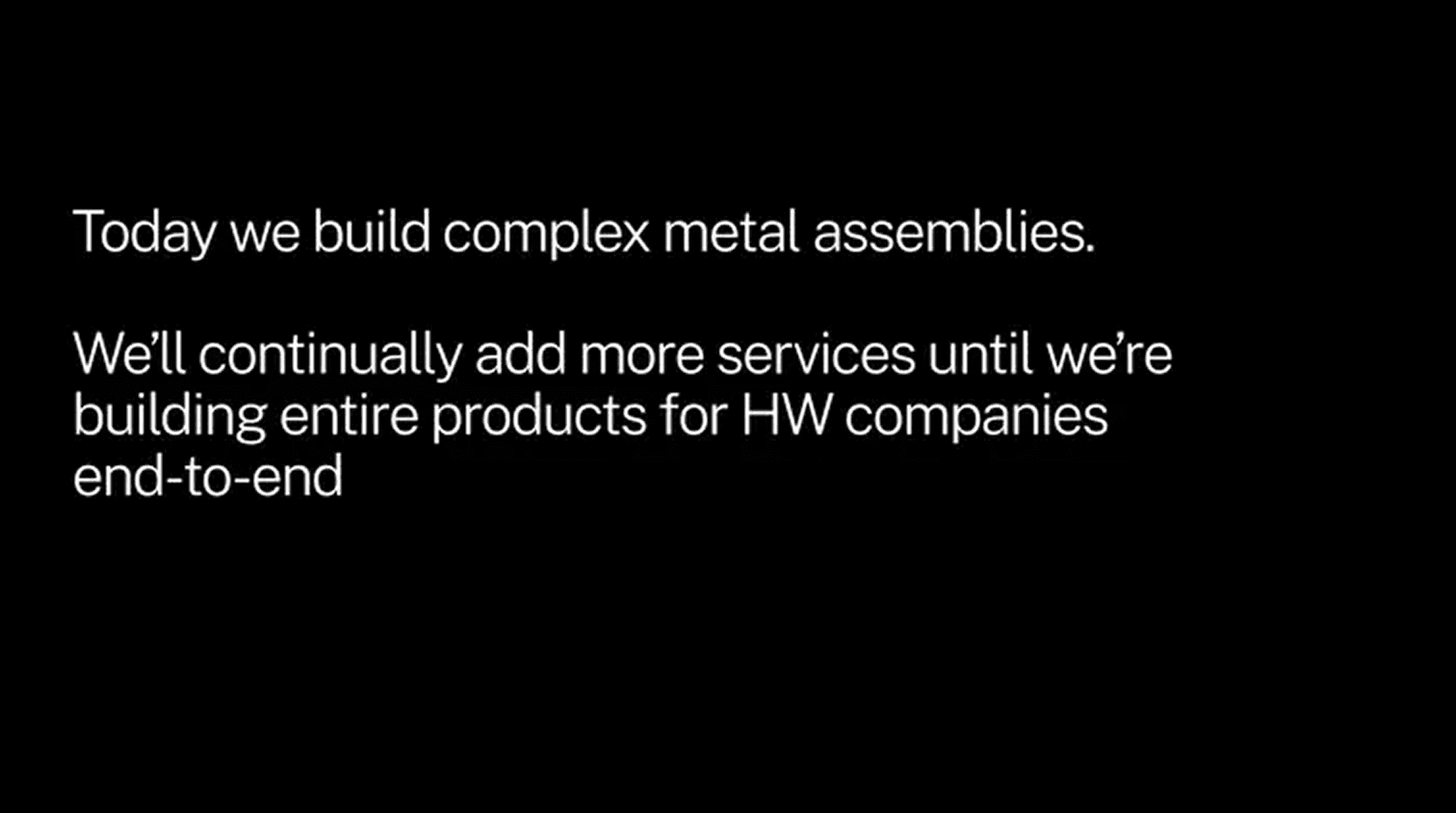
AI-powered contract manufacturing for fast-moving robotics and hardware companies. Backed by YC, raised seed in late 2025.
RMFG raised a $4.5M seed led by YC in late 2025. The deck is short and confident — it leads with the macro shift in physical AI, then pivots to a software-first wedge into contract manufacturing. Below: a slide-by-slide breakdown of why this deck landed, what the traction story looked like, and four things Indian founders can steal from it.
RMFG raised a $4.5M seed led by Y Combinator in late 2025 — about 18 months after founding. The deck is short, confident, and built around one crisp insight: fast-moving hardware teams need a contract manufacturer that moves at software speed.
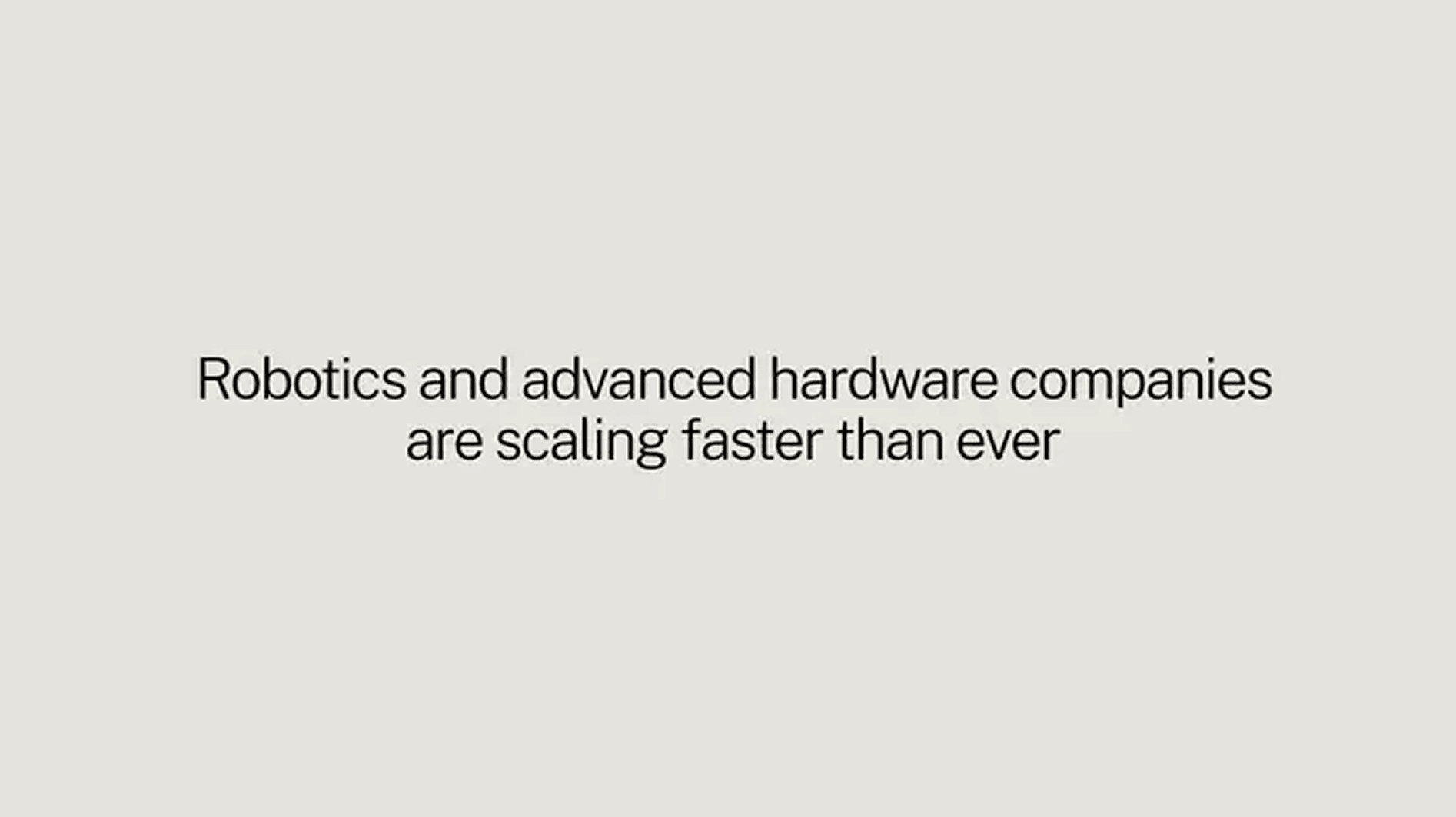
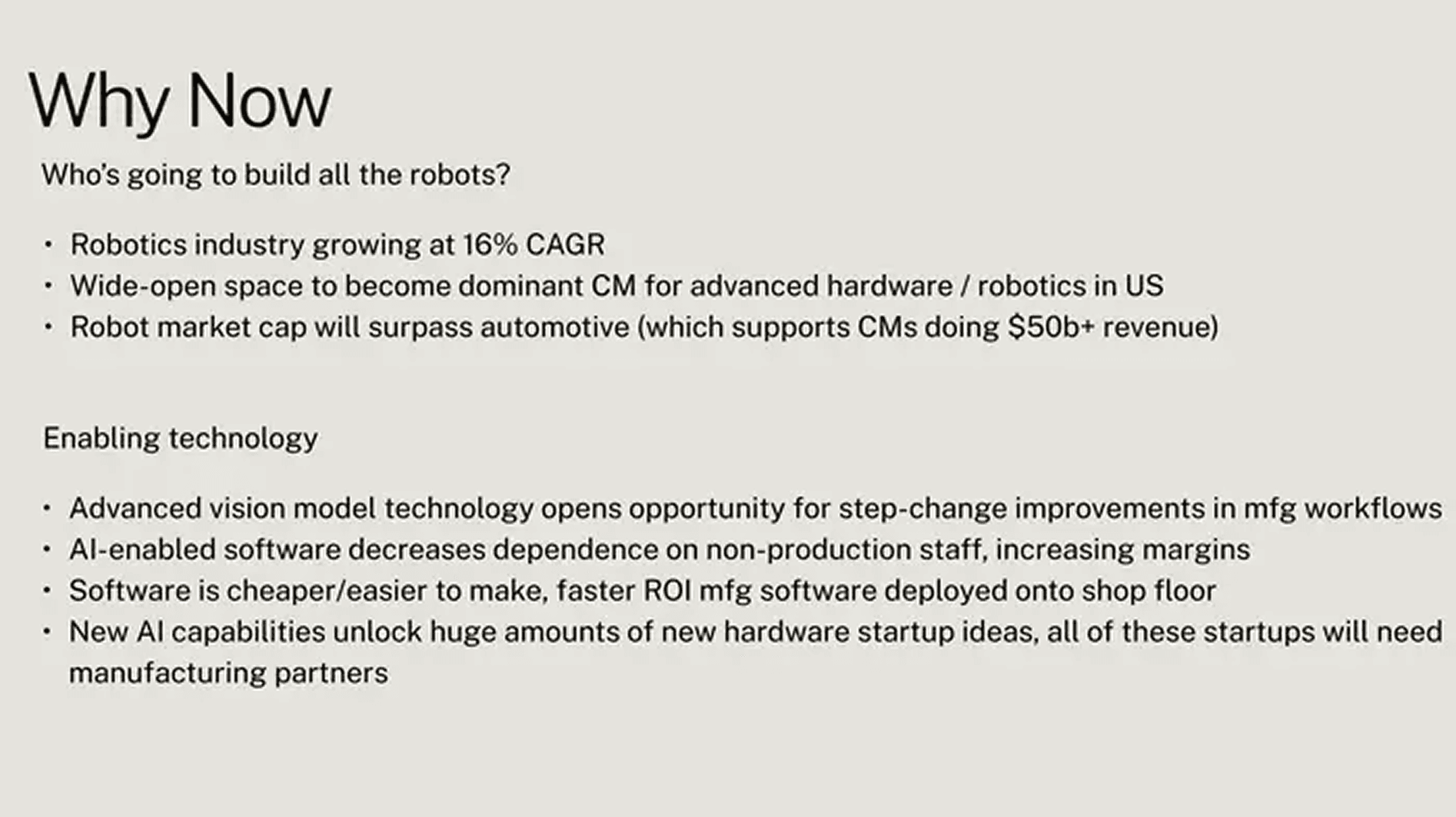
The deck doesn't bury the thesis. Slide 2 sets the macro: "Robotics and advanced hardware companies are scaling faster than ever." It's a single sentence, full-bleed, no chart. The investor doesn't need to be convinced that physical AI is happening — they need to be convinced you're the right team to serve it.
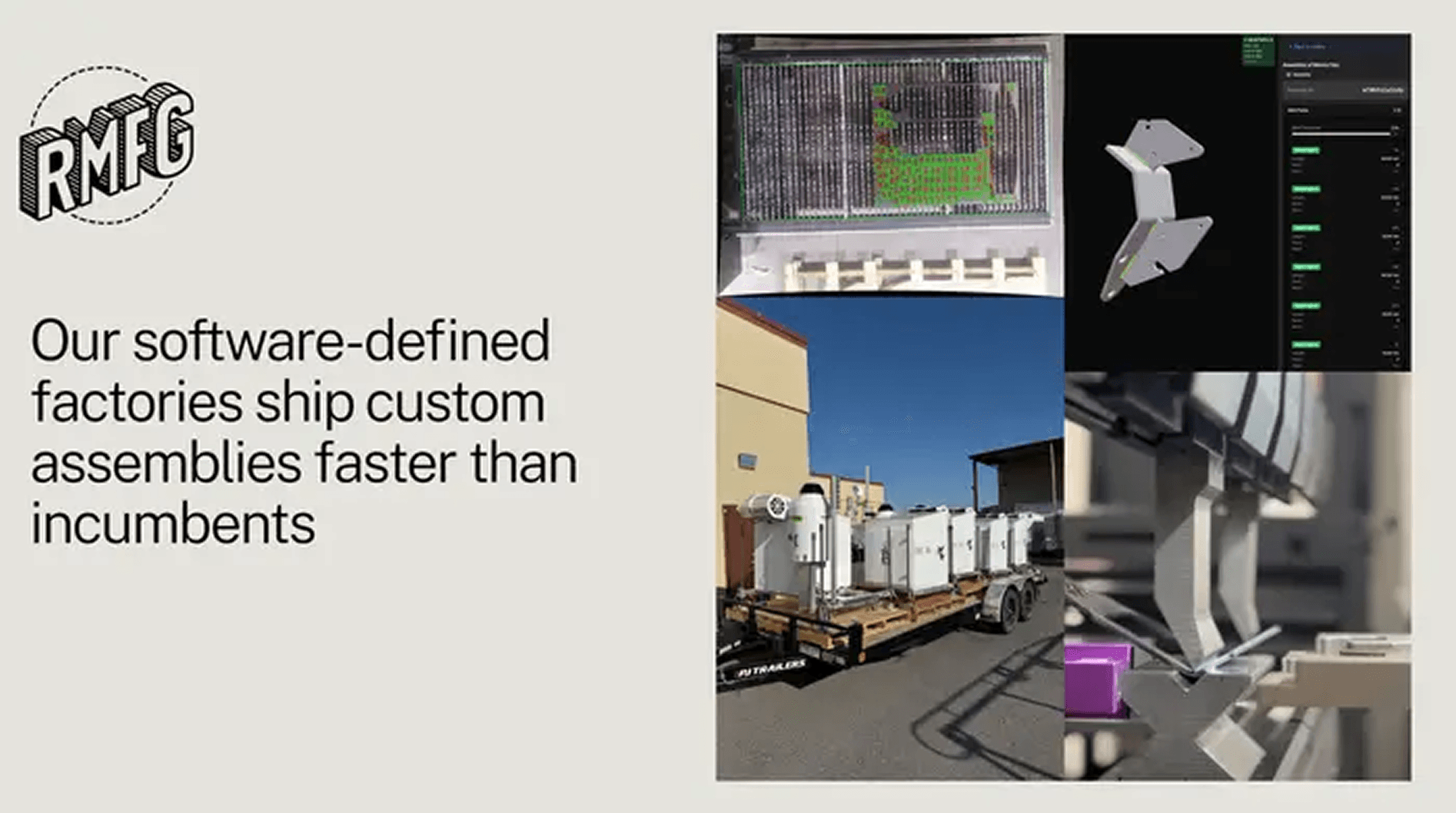
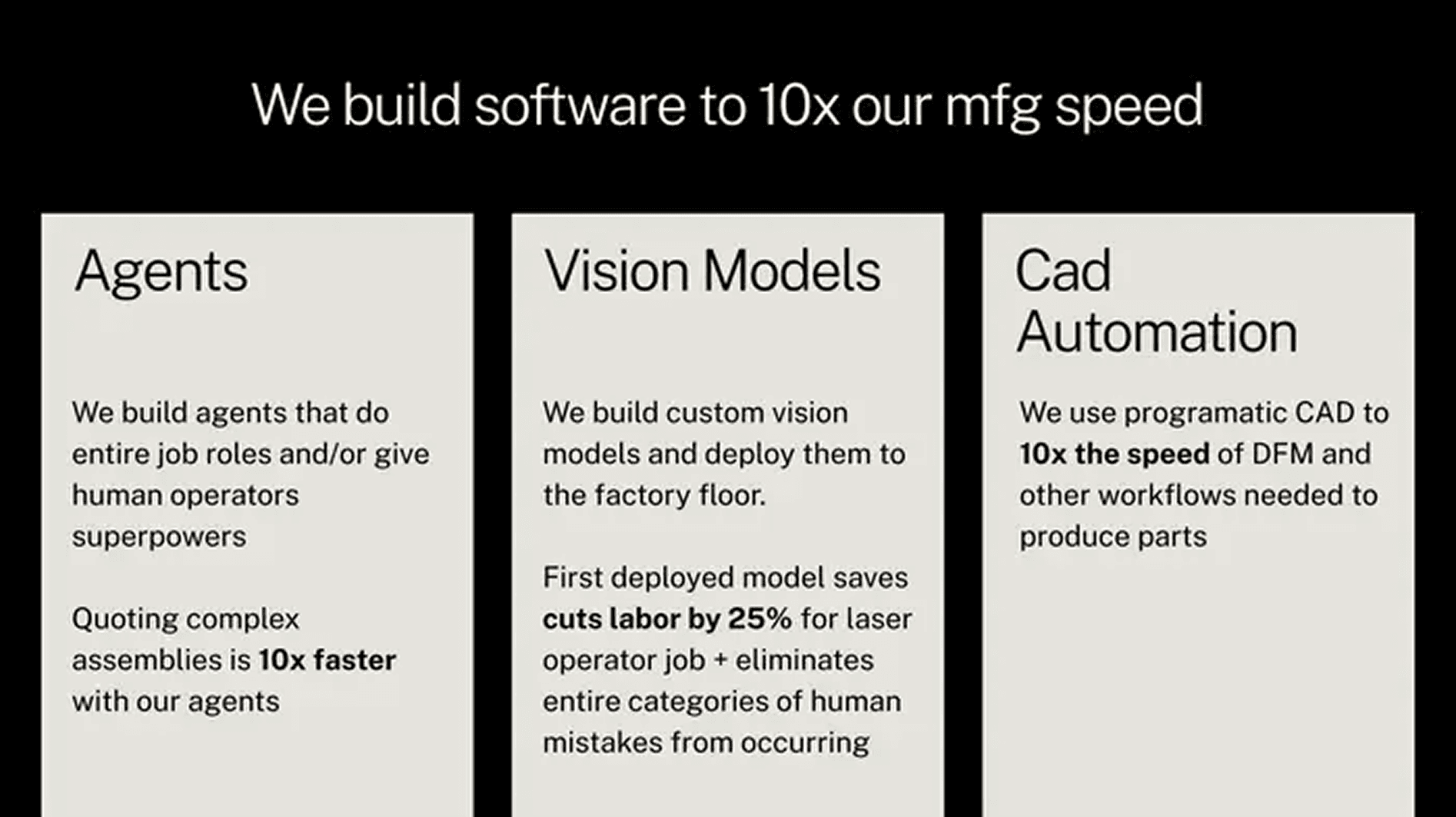
The product slide (slide 3 onwards) does something most hardware decks get wrong: it shows the software interface first, not the factory. RMFG is positioning as an AI-native contract manufacturer, and they lead with the dashboard — instant quoting, automated quality control, design adjustments on the fly. The factory floor is the moat, but the software is the wedge.
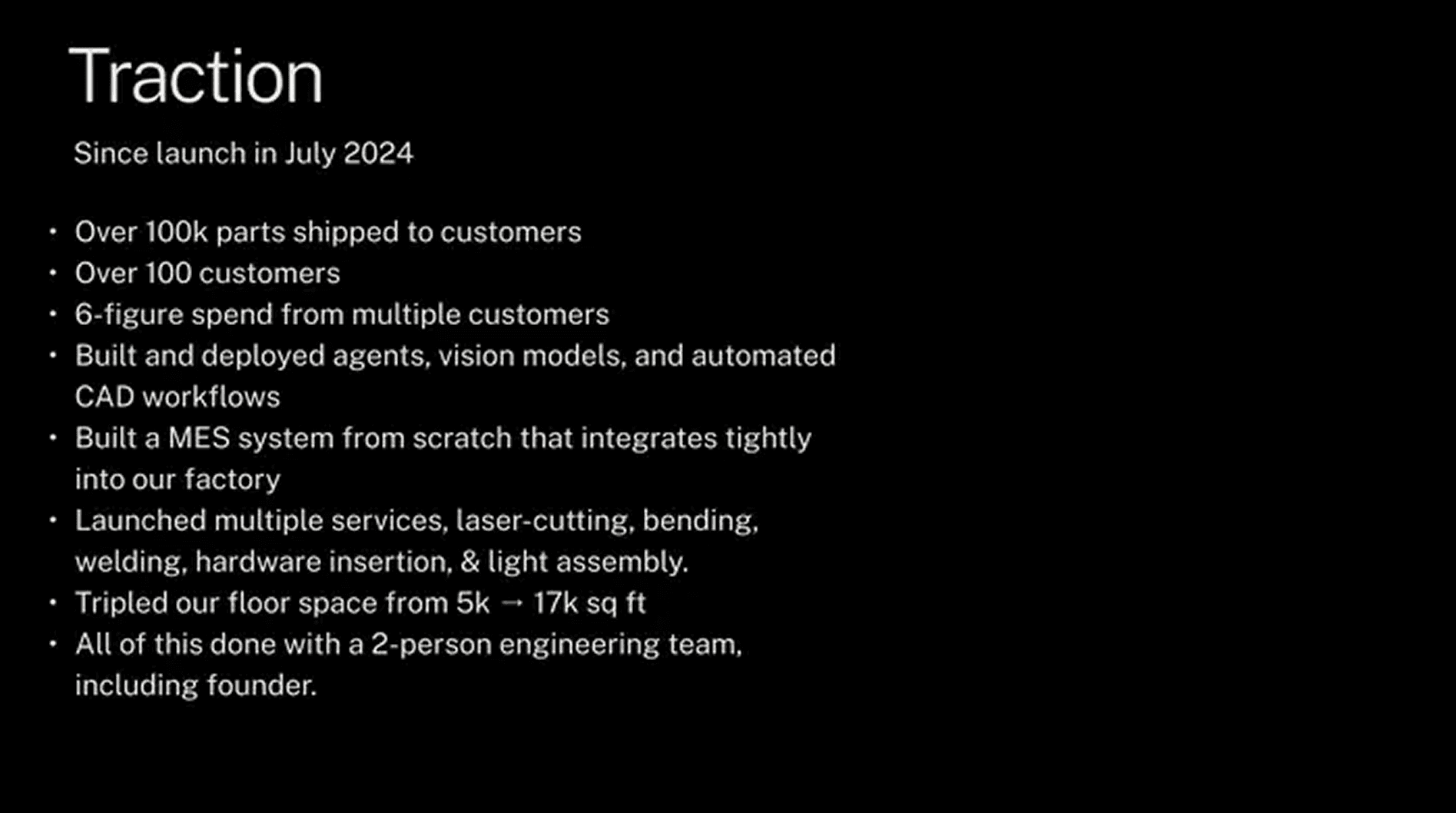
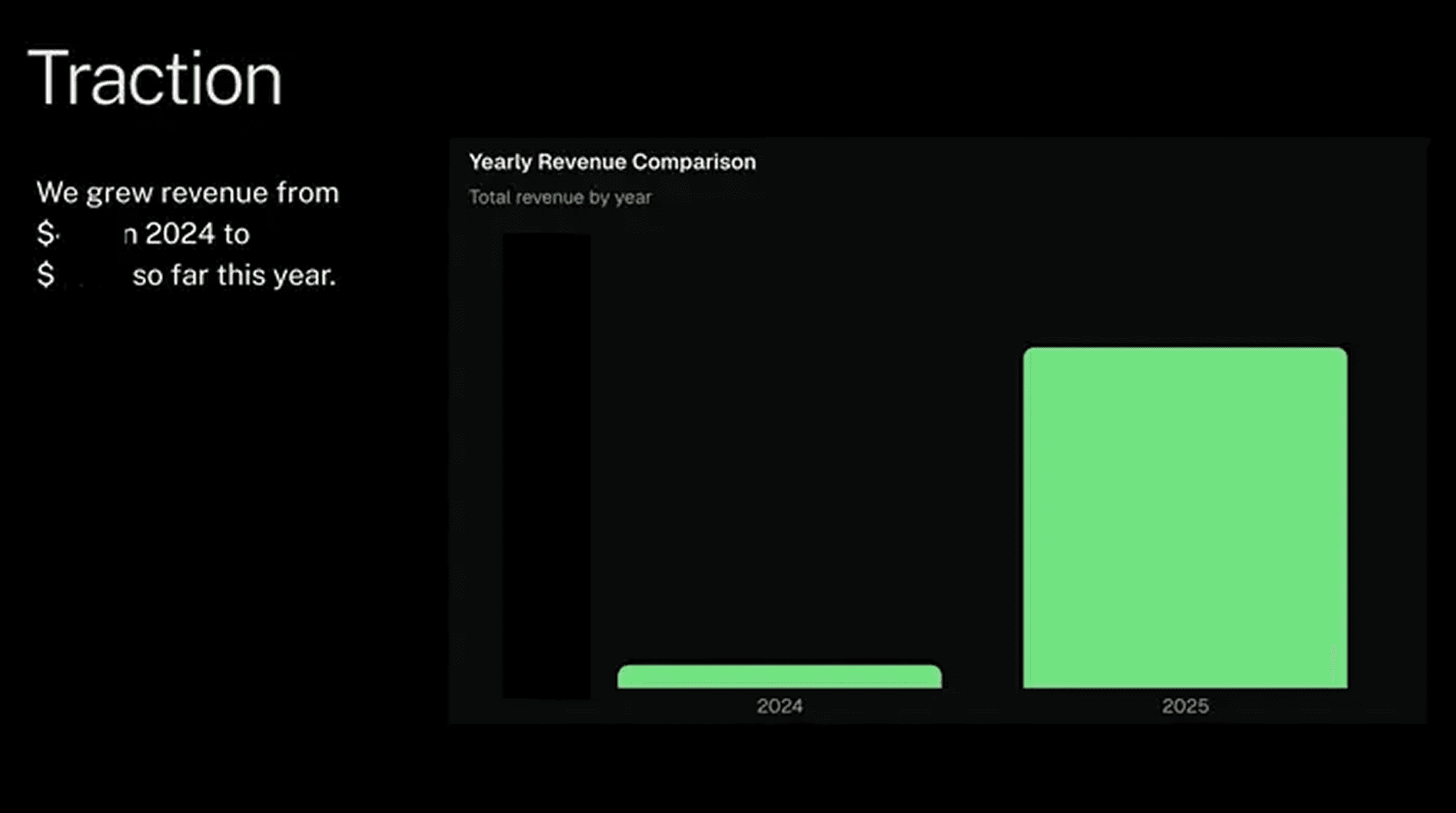
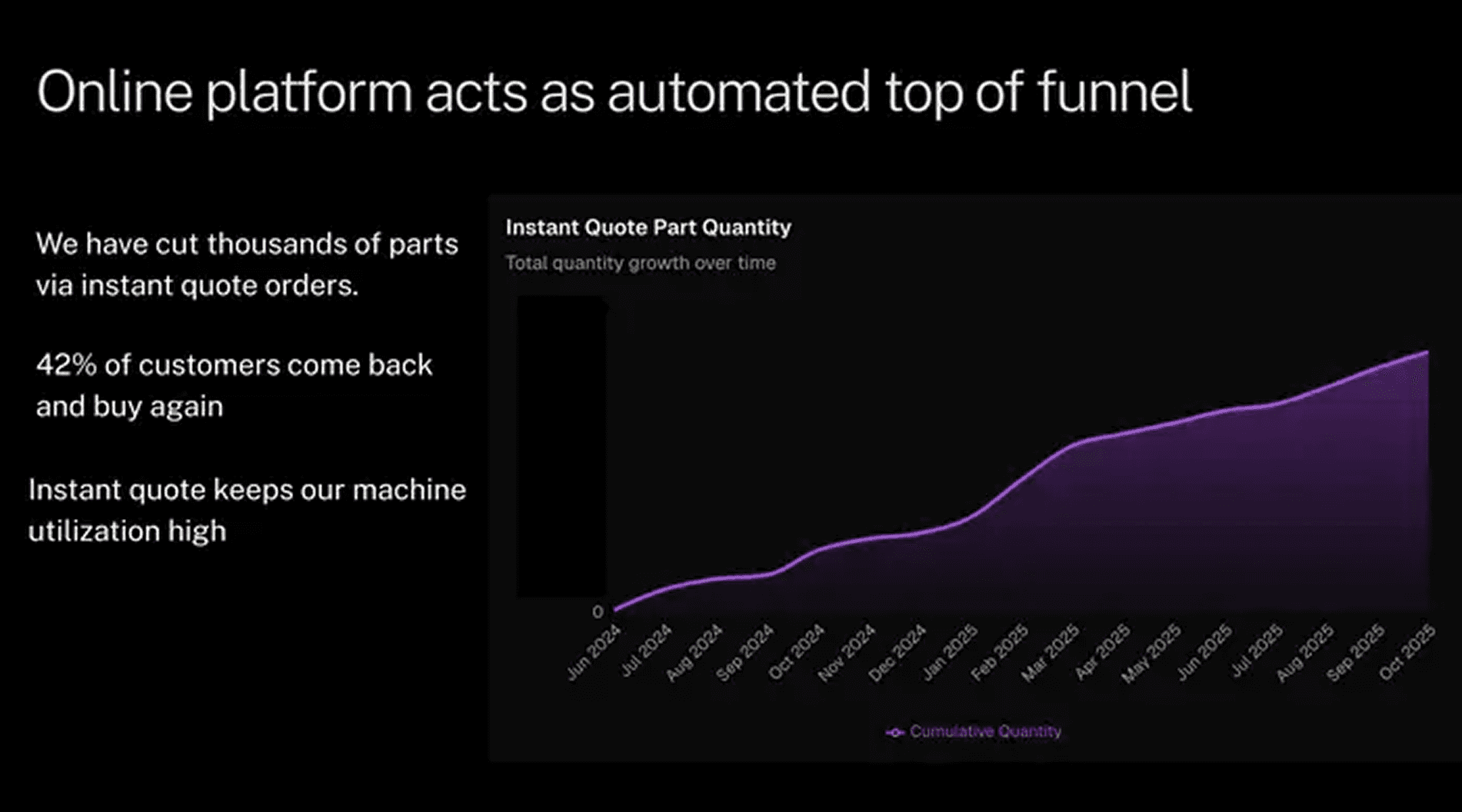
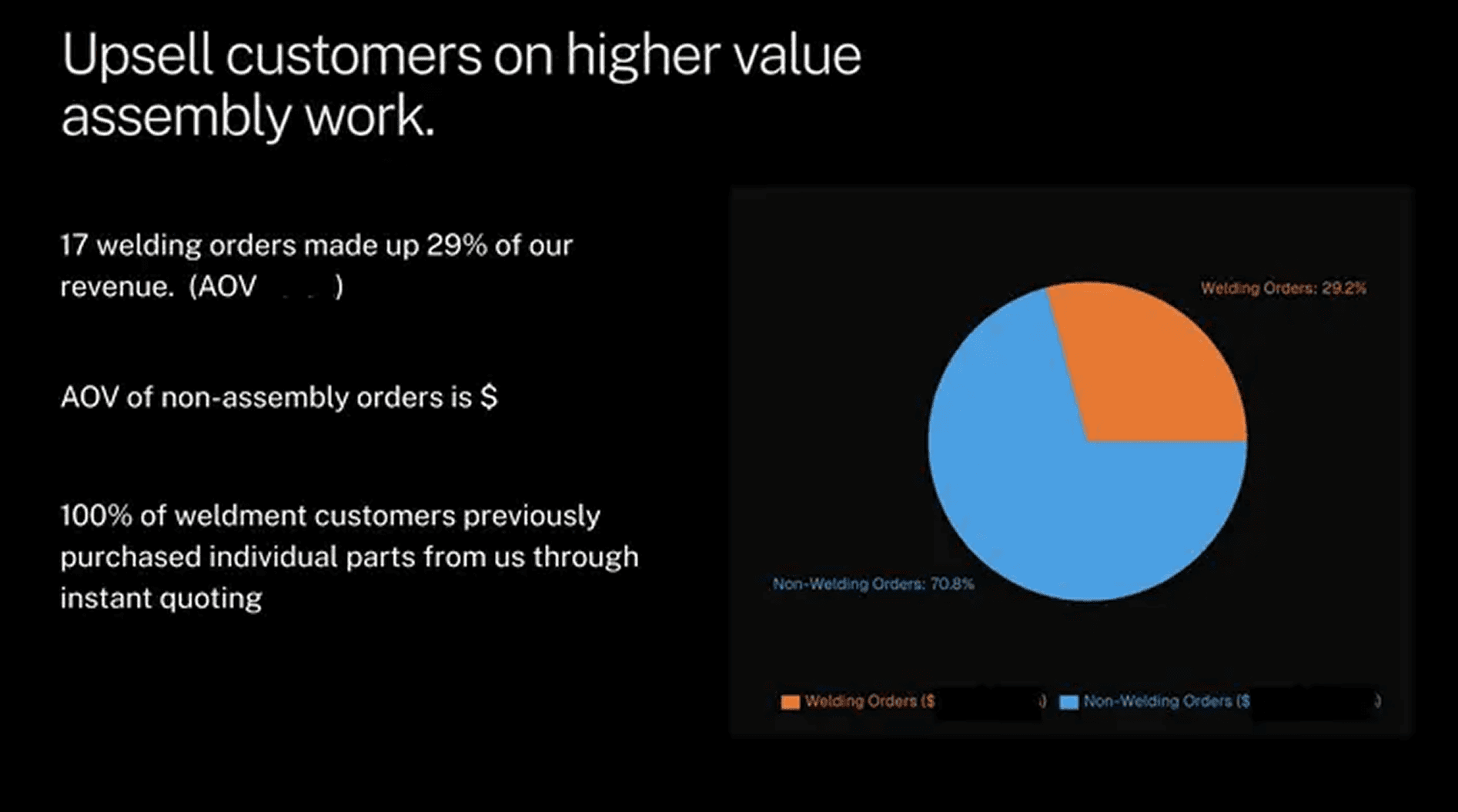
By the time you reach the traction slides (10–13), the numbers do the heavy lifting: - ~200 customers in 18 months - 100,000+ parts shipped - Logos including names you'd recognize from YC physical AI cohorts
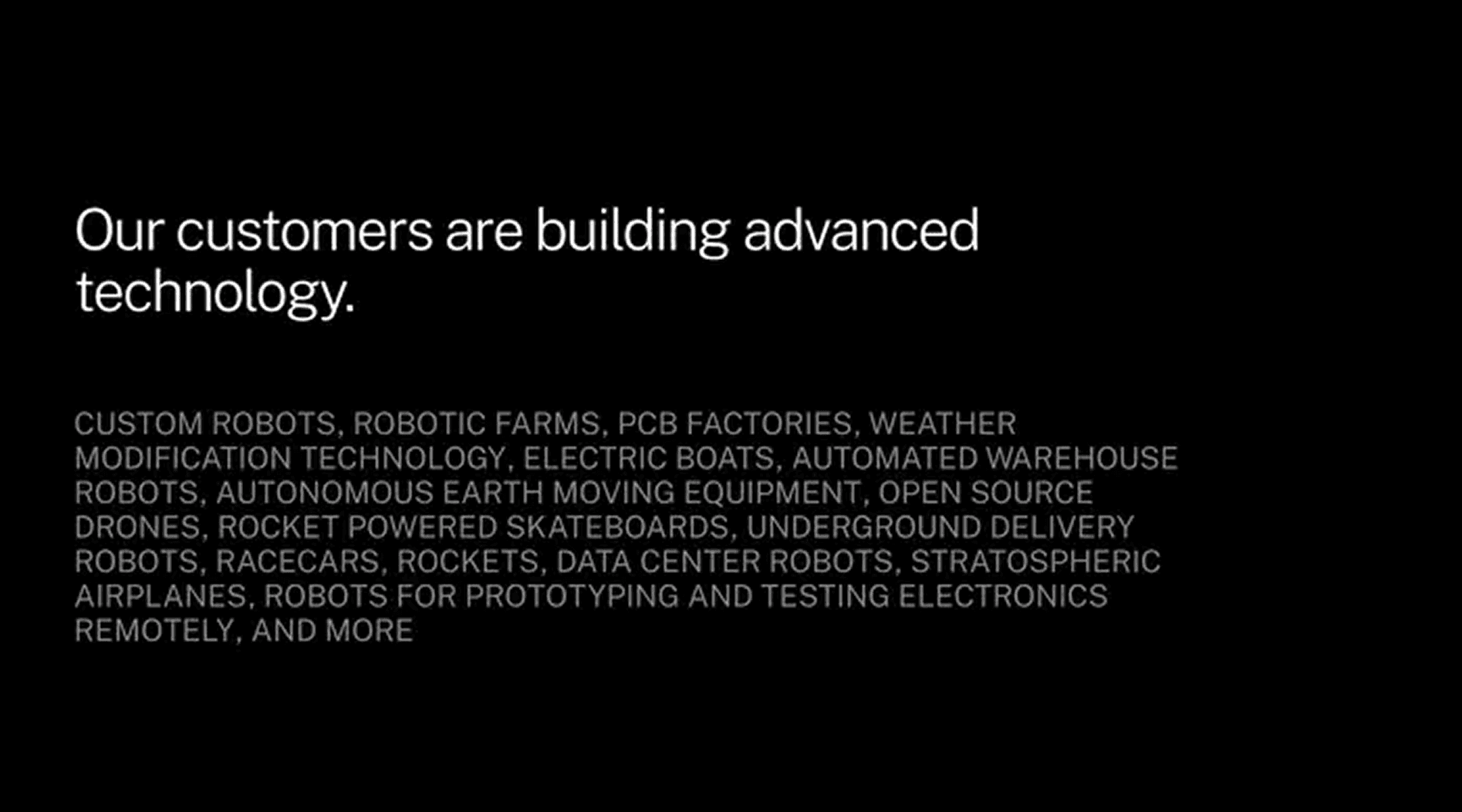
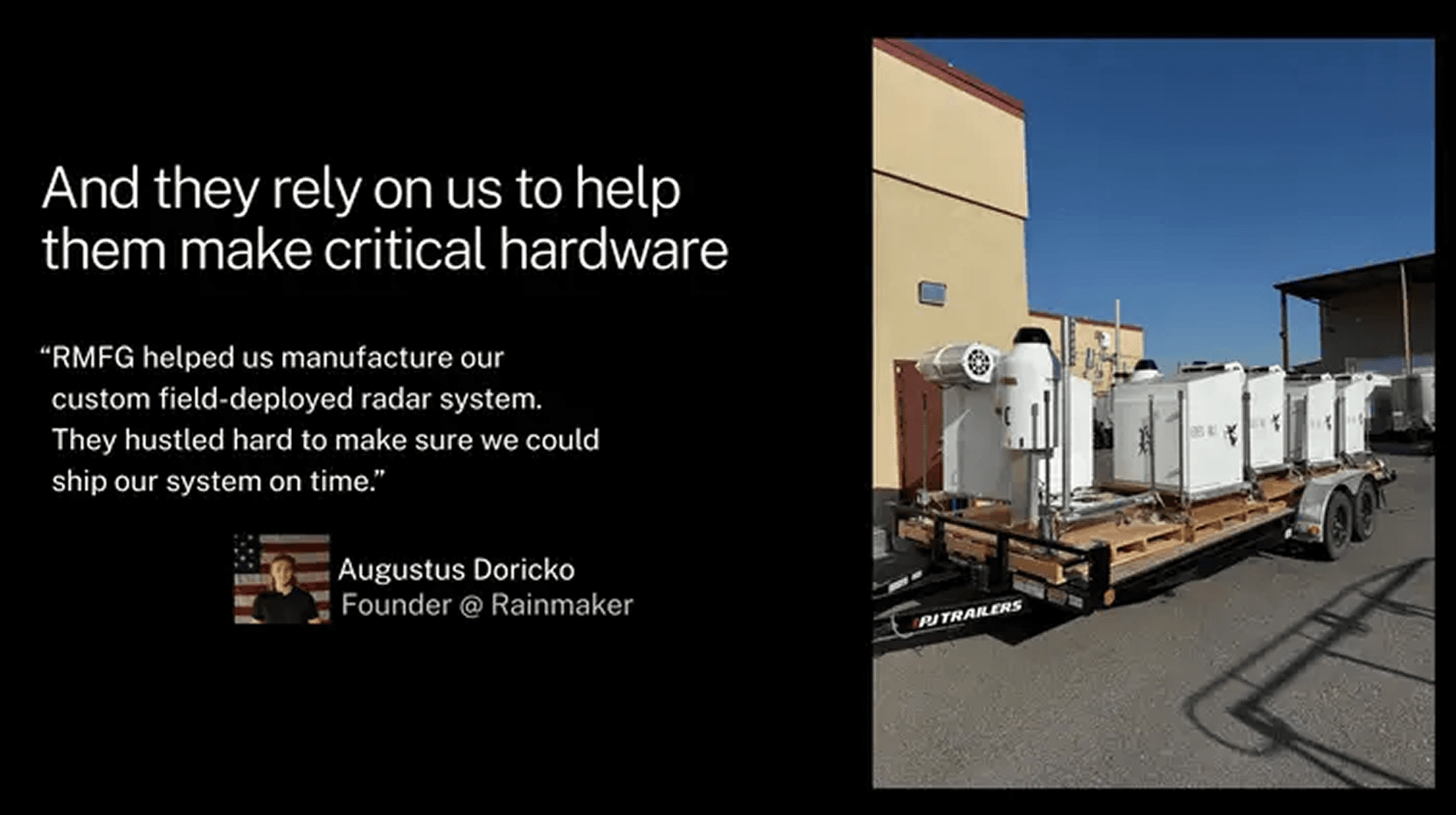
When you can show repeat orders from drill-rig builders, autonomous robotics teams, and cloud-seeding companies (yes — Rainmaker is on slide 18), you don't need to argue TAM.
Most decks end with "thank you." RMFG ends with a customer testimonial: a quote from Augustus Doricko, founder of Rainmaker, with a photo of the actual hardware they helped manufacture. It reframes the entire deck — this isn't a manufacturing pitch, it's a network of frontier hardware companies that can't exist without RMFG.